- Letters: C/ABIKLT
- Words: 49
- Points: 273
- Pangrams: 3
|
The table provides clues for the roots of words in today's NY Times Spelling Bee. You're responsible for prefixes, suffixes,
tense changes, plurals, doubling consonants before suffixes, and alternate spellings of roots. An exception:
since Sam won't allow S, when the root contains an S, the clue may be for a plural or suffixed form. "Mice" for example.
If a clue isn't self-explanatory, try googling it. And if AI tries to be too helpful, try prefixing your search with "word for" or "word meaning".
The TL;DR about the site comes after the table.
Past clues are available here |
Today's puzzle
| |
|
Table content
|
| answers covered | answer's first two letters | answer's length | clue for root (answer may need prefix, suffix, tense change, alt spelling, ...) |
|---|---|---|---|
| 1 | AB | 5 | Surprised (taken …), adv. |
| 1 | AB | 5 | Bead calculator |
| 1 | AC | 6 | African or Australian wattle tree |
| 1 | AC | 4 | Trendy smoothie berry |
| 1 | AL | 5 | Archaic exclamation of regret or dismay; from list word for “absence of” |
| 1 | AT | 6 | Assault, noun (an enemy …) or verb (… the problem head-on) |
| 1 | AT | 5 | Unfinished room below roof; garret |
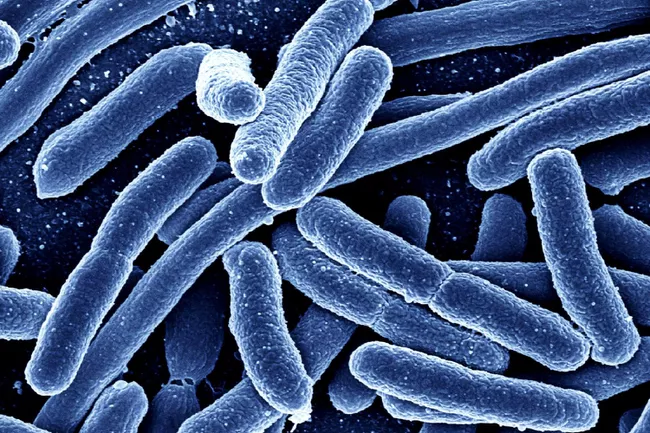
| 1 | BA | 7 | Rod-shaped microorganism |
| 1 | BA | 4 | Part of body containing your spine |
| 1 | BA | 7 | Say mean or spiteful things about someone who is not present, compound pangram |
| 1 | BA | 7 | Illuminated from behind, compound pangram |
| 1 | BA | 8 | Rude or cheeky remarks made in reply to someone in authority (compound made from opposite of front + speak) |
| 1 | BI | 8 | Holy book (starts with Genesis) |
| 1 | BL | 5 | Color that reflects no light; color of the 8-ball |
| 1 | BL | 9 | Exclude from membership, usually by secret ballot, compound |
| 1 | CA | 5 | Secret political faction |
| 1 | CA | 6 | Jewish mysticism; usually starts with K |
| 1 | CA | 5 | Succulent plant with a thick stem that usually has spines, lacks leaves, and occasionally has brilliantly colored flowers |
| 1 | CA | 4 | Phone, name, summon, or shout (out) |
| 1 | CA | 5 | Arum plant referred to as a lily |
| 1 | CA | 8 | Invitation to return for a second audition, compound |
| 1 | CA | 7 | Feline ♂ whistle; or jeer at passing ♀, compound |
| 1 | CA | 7 | Domestic feline hind appendage; or a tall, reedlike marsh plant with a dark brown, velvety cylindrical head of numerous tiny flowers, compound |
| 1 | CI | 8 | Italian “slipper” bread |
| 1 | CI | 5 | Short microscopic hairlike vibrating structure found in large numbers on the surface of certain cells; (anatomy) eyelash |
| 1 | CL | 5 | Heel sounds on tile, verb; or NPR “car” show guy 2 |
| 1 | CL | 5 | What you do to a web button or link, verb; or NPR “Car Talk” guy 1; the quality of allowing this is a pangram |
| 1 | CL | 9 | Internet content whose main purpose is to attract attention, compound pangram |
| 1 | IL | 5 | Hip bone |
| 1 | IL | 7 | Not forbidden by law or custom |
| 1 | IT | 6 | 𝑆𝑙𝑎𝑛𝑡𝑒𝑑 𝑡𝑒𝑥𝑡 𝑓𝑟𝑜𝑚 𝑅𝑜𝑚𝑒’𝑠 𝑐𝑜𝑢𝑛𝑡𝑟𝑦, to make it so is a pangram |
| 1 | KI | 4 | Strike with foot, verb/noun |
| 1 | KI | 8 | Recoil (from a gun), or payoff, compound noun |
| 1 | KI | 8 | Game that’s a cross between soccer & the one the Yankees play, compound |
| 1 | LA | 4 | Absence of (talent or imagination, e.g.), verb/noun |
| 1 | LA | 6 | Milk adj. (think acid in yogurt or sore muscles) |
| 2 | LA | 4,6 | Non-clerical |
| 1 | LI | 5 | Not forbidden by law or custom |
| 1 | LI | 4 | Tongue off (as an ice cream cone, e.g.), verb/noun |
| 1 | LI | 5 | Purple flower or shade |
| 1 | TA | 5 | Understood without being stated (… agreement), adj. |
| 1 | TA | 4 | Small nail (thumb …, carpet …), noun; use one, or sail into the wind, verb |
| 1 | TA | 4 | Diplomacy, sensitivity |
| 2 | TA | 6,8 | Action planned to achieve a specific end (negotiating …) |
| 1 | TA | 8 | American football player whose main job is to carry the ball (compound made from the hindmost part of many animals + the opposite of front), pangram |
| 1 | TA | 4 | Mineral in baby powder |
| 1 | TI | 4 | Bloodsucking arachnid that transmits Lyme disease, or mechanical clock sound; noun/verb |
This site provides clues for a day's New York Times Spelling Bee puzzle. It follows in Kevin Davis' footsteps. The original set of 4,500 clues came from him, and they still make up about three quarters of the current clue set.
The "Bee Roots" approach is to provide explicit clues for root words, not every word. As logophiles, we are pretty good at putting on prefixes and suffixes, changing tense, and forming plurals (including Latin plurals!). The clues cover root words, arranged alphabetically by root word, with a count of words in the puzzle that come from each root. For example, if a puzzle includes ROAM and ROAMING, there will be a clue for ROAM and a count of 2. The root may not appear in the puzzle at all; for example, the 2021-07-23 Bee included ICED, DEICE, and DEICED. For such a puzzle, the clue would be for ICE with a word count of 3.
The Bee Roots approach involves judgement sometimes. For example, if a puzzle includes LOVE, LOVED, and LOVELY, how many roots are needed to cover them? LOVE and LOVED share the root LOVE, certainly, but LOVELY is tricky. LOVE is part of its etymology, but by now, the word means "exquisitely beautiful," which is a lot farther from the meaning of LOVE than swithcing to past tense. I'm inclined to treat LOVE and LOVELY as separate roots. You may not agree, which is fine. Another thing we logophiles share is a LOVE of arguing about words on social media.
A few words can have one meaning as a suffixed form and another as a stand-alone word. EVENING, for example. In those cases I will use the meaning that I think is more common.
One last complication, until another one pops up: a few roots have multiple spellings, for example LOLLYGAG and LALLYGAG. Depending on the day's letters, and maybe even the editor's whims, one or both could be in the puzzle's answer list. With such roots, you could see a word count of 2, even if there are no applicable prefixes or suffixes.
I will do my best to keep this site up to date and helpful (I hope). Check it out, and tweet feedback to @donswartwout Tweet to @donswartwout