- Letters: I/ABCHLN
- Words: 46
- Points: 233
- Pangrams: 2
|
The table provides clues for the roots of words in today's NY Times Spelling Bee. You're responsible for prefixes, suffixes,
tense changes, plurals, doubling consonants before suffixes, and alternate spellings of roots. An exception:
since Sam won't allow S, when the root contains an S, the clue may be for a plural or suffixed form. "Mice" for example.
If a clue isn't self-explanatory, try googling it. And if AI tries to be too helpful, try prefixing your search with "word for" or "word meaning".
The TL;DR about the site comes after the table.
Past clues are available here |
Today's puzzle
| |
|
Table content
|
| answers covered | answer's first two letters | answer's length | clue for root (answer may need prefix, suffix, tense change, alt spelling, ...) |
|---|---|---|---|
| 1 | AB | 5 | Bead calculator |
| 1 | AC | 6 | African or Australian wattle tree |
| 1 | AC | 4 | Trendy smoothie berry |
| 1 | AL | 5 | Criminal’s excuse |
| 2 | BA | 11,12 | Drunken celebration in honor of the Roman god of wine, fertility, and revelry, plural and adjectival forms are pangrams |
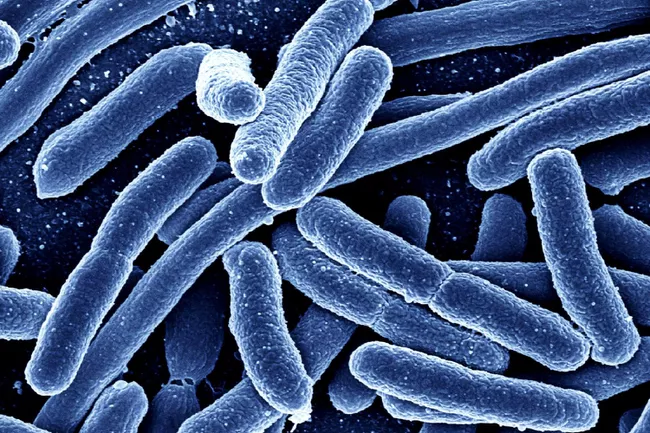
| 1 | BA | 7 | Rod-shaped microorganism |
| 1 | BA | 4 | Fee to avoid prison, noun; scoop water out of a ship, or abandon, verb |
| 1 | BI | 8 | Holy book (starts with Genesis) |
| 1 | BI | 4 | Invoice, or actor Murray, noun/verb |
| 1 | BI | 8 | Latin for lips, or lips of vagina |
| 2 | BL | 4,5 | Russian pancake |
| 1 | CA | 5 | Private room or compartment on a ship; small wooden house in a remote area (Abe Lincoln grew up in a log …) |
| 1 | CA | 8 | Someone who eats human flesh |
| 1 | CH | 4 | Spiced Indian tea (… latte) |
| 1 | CH | 5 | String of metal links |
| 1 | CH | 4 | Faddish “pet” mint plant |
| 1 | CH | 4 | Fashionable |
| 1 | CH | 5 | Girl, Spanish |
| 1 | CH | 6 | Pretentious style (or almost 2x fashionable) |
| 1 | CH | 5 | Hot pepper, or spicy meat stew (… con carne) |
| 1 | CH | 5 | Cool (in the fridge), or relax (… out) |
| 1 | CH | 4 | Bottom of face, noun; or raise it above a bar in a pull-up, verb |
| 1 | CH | 5 | Large Asian country, or ceramics from there |
| 1 | CH | 10 | S Am rodent with dense fur we use for clothing |
| 1 | CI | 5 | Short microscopic hairlike vibrating structure found in large numbers on the surface of certain cells; (anatomy) eyelash |
| 1 | CI | 5 | Easy task (it’s a …), noun; or tighten up (belt or saddle, e.g.), verb |
| 1 | CL | 6 | Secure a victory (If they win today, the team will … a spot in the playoffs), or hug a boxing opponent to bind his arms; verb |
| 3 | CL | 6,8,9 | Medical facility (health …) |
| 1 | HA | 4 | Frozen rain “stone,” noun; or summon a taxi, verb |
| 1 | HI | 7 | Small portable japanese grill |
| 1 | HI | 4 | What Jack & Jill went up |
| 1 | IL | 5 | Hip bone |
| 1 | IN | 4 | 1/12 of a foot, noun; or move slowly, verb |
| 2 | LA | 5,6 | Latin for lips, or lips of vagina |
| 2 | LA | 4,6 | Non-clerical |
| 1 | LA | 5 | Hawaiian porch or island |
| 1 | LA | 4 | Put something down |
| 1 | LI | 5 | Purple flower or shade |
| 1 | NA | 4 | Spike that’s hammered, noun/verb |
| 1 | NI | 6 | Vitamin B3 |
This site provides clues for a day's New York Times Spelling Bee puzzle. It follows in Kevin Davis' footsteps. The original set of 4,500 clues came from him, and they still make up about three quarters of the current clue set.
The "Bee Roots" approach is to provide explicit clues for root words, not every word. As logophiles, we are pretty good at putting on prefixes and suffixes, changing tense, and forming plurals (including Latin plurals!). The clues cover root words, arranged alphabetically by root word, with a count of words in the puzzle that come from each root. For example, if a puzzle includes ROAM and ROAMING, there will be a clue for ROAM and a count of 2. The root may not appear in the puzzle at all; for example, the 2021-07-23 Bee included ICED, DEICE, and DEICED. For such a puzzle, the clue would be for ICE with a word count of 3.
The Bee Roots approach involves judgement sometimes. For example, if a puzzle includes LOVE, LOVED, and LOVELY, how many roots are needed to cover them? LOVE and LOVED share the root LOVE, certainly, but LOVELY is tricky. LOVE is part of its etymology, but by now, the word means "exquisitely beautiful," which is a lot farther from the meaning of LOVE than swithcing to past tense. I'm inclined to treat LOVE and LOVELY as separate roots. You may not agree, which is fine. Another thing we logophiles share is a LOVE of arguing about words on social media.
A few words can have one meaning as a suffixed form and another as a stand-alone word. EVENING, for example. In those cases I will use the meaning that I think is more common.
One last complication, until another one pops up: a few roots have multiple spellings, for example LOLLYGAG and LALLYGAG. Depending on the day's letters, and maybe even the editor's whims, one or both could be in the puzzle's answer list. With such roots, you could see a word count of 2, even if there are no applicable prefixes or suffixes.
I will do my best to keep this site up to date and helpful (I hope). Check it out, and tweet feedback to @donswartwout Tweet to @donswartwout