- Letters: F/DEILNU
- Words: 78
- Points: 431
- Pangrams: 4
|
The table provides clues for the roots of words in today's NY Times Spelling Bee. You're responsible for prefixes, suffixes,
tense changes, plurals, doubling consonants before suffixes, and alternate spellings of roots. An exception:
since Sam won't allow S, when the root contains an S, the clue may be for a plural or suffixed form. "Mice" for example.
If a clue isn't self-explanatory, try googling it. And if AI tries to be too helpful, try prefixing your search with "word for" or "word meaning".
The TL;DR about the site comes after the table.
Past clues are available here |
Today's puzzle
| |
|
Table content
|
| answers covered | answer's first two letters | answer's length | clue for root (answer may need prefix, suffix, tense change, alt spelling, ...) |
|---|---|---|---|
| 2 | DE | 6,8 | Resist an attack or protect from harm |
| 2 | DE | 6,7 | Sully, mar, spoil, desecrate |
| 2 | DE | 6,7 | Give the meaning of a word, as a dictionary |
| 1 | DE | 6 | Openly resist or refuse to obey |
| 1 | DE | 7 | Treat someone or something as a god |
| 2 | DE | 6,8 | A pool of $ (mutual, reserve…), noun; or provide $ for a particular purpose |
| 1 | DU | 4 | Beer brand in “The Simpsons,” or actress Hilary of “A Cinderella Story”) |
| 2 | DU | 6,6 | Cloth bag named for Belgian city where its fabric was made |
| 1 | ED | 7 | Instruct or improve someone, morally or intellectually |
| 1 | EL | 5 | Small, delicate, impish; as a Keebler worker, adj. |
| 1 | FE | 4 | Give a meal to |
| 1 | FE | 4 | Perceive by touch; or experience (emotion) |
| 1 | FE | 5 | Mammal of the cat family |
| 1 | FE | 6 | Cat adj./noun |
| 2 | FE | 4,6 | Cut or knock down (a tree or opponent, e.g.) |
| 2 | FE | 4,6 | Look after & provide for oneself, without any help from others |
| 1 | FE | 6 | Veg & seed used in cooking, esp. Italian |
| 2 | FE | 4,6 | Prolonged bitter quarrel, or “Family …” game show, noun/verb |
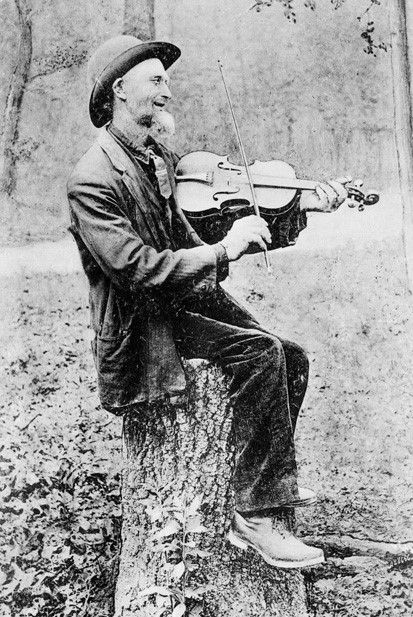
| 2 | FI | 6,7 | Violin, especially when used to play folk music, noun/verb |
| 1 | FI | 4 | Medieval for feudal land or area of control; often has –DOM suffix |
| 2 | FI | 5,7 | What a farmer works in, or what football is played on, noun/verb |
| 1 | FI | 5 | Devilish person, or slang for addict or fanatic |
| 2 | FI | 4,5 | Small flute used with a drum in military bands, noun/verb |
| 2 | FI | 4,5 | Folder of related papers, or tool for smoothing edges (fingernails, e.g.), noun/verb, negated past tense is a pangram |
| 2 | FI | 4,6 | Add material until the container or hole is at capacity, negated past tense is a pangram |
| 1 | FI | 6 | Flat appendage on the body of an aquatic animal (dorsal …) |
| 1 | FI | 4 | Locate something that was lost, verb/noun |
| 2 | FI | 4,5 | Impose a $ penalty (the judge …d him $100 for speeding) |
| 2 | FL | 4,4 | Run away from danger, NOT a bug that causes itching |
| 1 | FL | 4 | Chimney duct, NOT a seasonal illness |
| 2 | FL | 5,7 | Dryer lint, noun, or what you do to a flat pillow (… up) |
| 1 | FL | 5 | Liquid |
| 1 | FL | 5 | What airplanes and most birds can do, verb; or common insect, noun; or go high in the air (baseball noun/verb) |
| 2 | FU | 6,7 | Confuse or stupefy, esp. with alcohol, usually has BE– prefix |
| 2 | FU | 4,6 | Gasoline or oil, e.g., noun; or add it to a tank (… up) |
| 2 | FU | 7,9 | Bring to reality (… your dreams), or carry out a duty (… your obligations), negated past tense is a pangram |
| 1 | FU | 4 | At capacity (I can’t finish the meal, I’m …), adj. |
| 2 | FU | 4,6 | A pool of $ (mutual, reserve…), noun; or provide $ for a particular purpose |
| 2 | FU | 6,8 | Pouring tool that’s wide at top & narrow at bottom, noun; or guide something through something else |
| 1 | IN | 6 | Add material until the container or hole is at capacity, negated past tense is a pangram |
| 1 | IN | 7 | Someone who does not believe in a particular religion |
| 1 | IN | 7 | Inner part of a sports venue, especially the diamond enclosed by the bases in baseball or softbell |
| 1 | IN | 8 | Material that plugs a hole, noun; or build on vacant land in a dense city |
| 1 | LI | 4 | Cereal Mikey prefers, board game, or “death” antonym |
| 1 | LI | 8 | What a palm reader checks to see when you’ll die, or “Who Wants to be a Millionaire” friend assistance, compound |
| 2 | LU | 4,6 | The forward edge of a fore-and-aft sail, noun; or turn the head of a ship toward the wind, verb |
| 1 | NE | 7 | Require; verb/noun |
| 1 | NU | 9 | Having no legal or binding force; invalid |
| 1 | UN | 10 | Resist an attack or protect from harm |
| 1 | UN | 9 | Give the meaning of a word, as a dictionary |
| 1 | UN | 7 | Folder of related papers, or tool for smoothing edges (fingernails, e.g.), noun/verb, negated past tense is a pangram |
| 1 | UN | 8 | Add material until the container or hole is at capacity, negated past tense is a pangram |
| 1 | UN | 11 | Bring to reality (… your dreams), or carry out a duty (… your obligations), negated past tense is a pangram |
| 1 | UN | 8 | A pool of $ (mutual, reserve…), noun; or provide $ for a particular purpose |
| 1 | UN | 5 | Malnourished expressed as a negative; ends in past tense of list word; adj. |
| 1 | UN | 7 | Make into a whole (Prussia …ed Germany; physicists want a Grand …ed Theory) |
This site provides clues for a day's New York Times Spelling Bee puzzle. It follows in Kevin Davis' footsteps. The original set of 4,500 clues came from him, and they still make up about three quarters of the current clue set.
The "Bee Roots" approach is to provide explicit clues for root words, not every word. As logophiles, we are pretty good at putting on prefixes and suffixes, changing tense, and forming plurals (including Latin plurals!). The clues cover root words, arranged alphabetically by root word, with a count of words in the puzzle that come from each root. For example, if a puzzle includes ROAM and ROAMING, there will be a clue for ROAM and a count of 2. The root may not appear in the puzzle at all; for example, the 2021-07-23 Bee included ICED, DEICE, and DEICED. For such a puzzle, the clue would be for ICE with a word count of 3.
The Bee Roots approach involves judgement sometimes. For example, if a puzzle includes LOVE, LOVED, and LOVELY, how many roots are needed to cover them? LOVE and LOVED share the root LOVE, certainly, but LOVELY is tricky. LOVE is part of its etymology, but by now, the word means "exquisitely beautiful," which is a lot farther from the meaning of LOVE than swithcing to past tense. I'm inclined to treat LOVE and LOVELY as separate roots. You may not agree, which is fine. Another thing we logophiles share is a LOVE of arguing about words on social media.
A few words can have one meaning as a suffixed form and another as a stand-alone word. EVENING, for example. In those cases I will use the meaning that I think is more common.
One last complication, until another one pops up: a few roots have multiple spellings, for example LOLLYGAG and LALLYGAG. Depending on the day's letters, and maybe even the editor's whims, one or both could be in the puzzle's answer list. With such roots, you could see a word count of 2, even if there are no applicable prefixes or suffixes.
I will do my best to keep this site up to date and helpful (I hope). Check it out, and tweet feedback to @donswartwout Tweet to @donswartwout