- Letters: O/ACDHIR
- Words: 51
- Points: 218
- Pangrams: 1
|
The table provides clues for the roots of words in today's NY Times Spelling Bee. You're responsible for prefixes, suffixes,
tense changes, plurals, doubling consonants before suffixes, and alternate spellings of roots. An exception:
since Sam won't allow S, when the root contains an S, the clue may be for a plural or suffixed form. "Mice" for example.
If a clue isn't self-explanatory, try googling it. And if AI tries to be too helpful, try prefixing your search with "word for" or "word meaning".
The TL;DR about the site comes after the table.
Past clues are available here |
Today's puzzle
| |
|
Table content
|
| answers covered | answer's first two letters | answer's length | clue for root (answer may need prefix, suffix, tense change, alt spelling, ...) |
|---|---|---|---|
| 1 | AC | 6 | Treaty, or large Honda sedan; noun; or agree (we are in …), verb |
| 1 | AC | 5 | What a sneeze sounds like |
| 1 | AR | 4 | Musically, “with the bow,” or gas brand |
| 1 | AR | 5 | Passion (Latin “to burn”) |
| 1 | CA | 5 | Bean source of Hershey Bars |
| 1 | CA | 6 | Exercise that works the heart, slang abbr. |
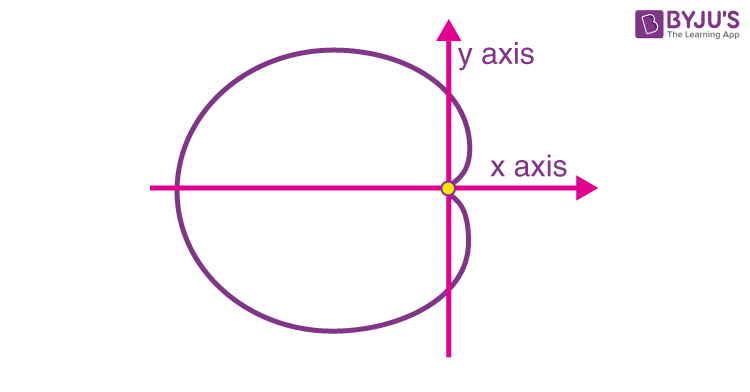
| 1 | CA | 8 | Heart-shaped curve in math |
| 1 | CH | 6 | Large cloth worn as a combination head covering, veil, and shawl usually by Muslim women especially in Iran |
| 1 | CH | 5 | Singing group (Mormon Tabernacle …) |
| 1 | CH | 5 | Multiple musical notes played at the same time; or (geometry) a line segment joining two points on a circle |
| 1 | CI | 4 | “Hi” or “Bye” in Italian (“… bella”) |
| 1 | CO | 7 | Furniture for sitting, noun; or lead a committee, verb, gerund form is a pangram |
| 1 | CO | 5 | Athletic instructor or trainer, noun/verb; or bus, noun |
| 1 | CO | 4 | 1st part of popular soda brand name |
| 1 | CO | 5 | Spherical or nearly spherical bacterium |
| 1 | CO | 5 | Hot winter drink with marshmallows, or the powder it’s made from |
| 1 | CO | 4 | Concluding event, remark, or section, especially in music |
| 1 | CO | 4 | Silver Pacific salmon |
| 1 | CO | 4 | Fiber from the outer husk of the coconut, used for making ropes & matting |
| 1 | CO | 4 | Unit of firewood, or a string-like object (umbilical, vocal, electric …) |
| 1 | CO | 7 | Bullfight, Spanish (… de toros) |
| 1 | CO | 8 | Hallway |
| 1 | CR | 4 | Holey shoe, or alligator relative abbr. |
| 1 | CR | 5 | Small plant that blooms early in spring |
| 1 | DO | 4 | Extinct bird; or stupid person, slang |
| 1 | DO | 6 | Thingamajig, slang; ends in “father” nickname |
| 1 | DO | 4 | Room or bldg. entrance |
| 1 | DO | 6 | Mahimahi; or South American freshwater fish with a golden body and red fins |
| 1 | DR | 5 | Star Wars robot (R2D2, C3PO, BB–8), or last syllable of Google phone OS (An…) |
| 1 | HA | 6 | The way the stuff that grows on your scalp is styled, compound |
| 1 | HO | 4 | Crystallized frost |
| 1 | HO | 5 | Amass (money or valued objects) and hide or store away, verb/noun |
| 1 | HO | 5 | Cheap liquor |
| 1 | HO | 4 | “Little Red Riding …” noggin covering |
| 1 | HO | 6 | Column of weathered rocks, or black magic; rhyming word |
| 1 | HO | 6 | US Marine cheer word, each syllable pronounced separately |
| 1 | HO | 4 | Jewish circle dance (“The …”) |
| 1 | HO | 6 | Very unpleasant or disagreeable |
| 1 | HO | 6 | Scary Steven King genre |
| 1 | IC | 5 | Greek gods’ blood; or wound seepage |
| 1 | OD | 4 | Bad smell (body …) |
| 1 | OR | 4 | Killer “whale” |
| 1 | OR | 7 | Place where multiple fruit trees grow |
| 1 | OR | 6 | Plant with complex flowers that are often showy or bizarrely shaped |
| 1 | RA | 9 | Chicory with dark red leaves, pangram |
| 1 | RA | 5 | AM/FM music & talk device in car & home |
| 1 | RO | 5 | Scurrying insect; often starts with COCK– |
| 1 | RO | 4 | Street ("Abbey …"), or “rocky …” ice cream flavor |
| 1 | RO | 4 | Lion “shout” |
| 1 | RO | 6 | Ornamental decorative style from the late Baroque |
| 1 | RO | 4 | Large crucifix above altar, anagram of bldg. entrance |
This site provides clues for a day's New York Times Spelling Bee puzzle. It follows in Kevin Davis' footsteps. The original set of 4,500 clues came from him, and they still make up about three quarters of the current clue set.
The "Bee Roots" approach is to provide explicit clues for root words, not every word. As logophiles, we are pretty good at putting on prefixes and suffixes, changing tense, and forming plurals (including Latin plurals!). The clues cover root words, arranged alphabetically by root word, with a count of words in the puzzle that come from each root. For example, if a puzzle includes ROAM and ROAMING, there will be a clue for ROAM and a count of 2. The root may not appear in the puzzle at all; for example, the 2021-07-23 Bee included ICED, DEICE, and DEICED. For such a puzzle, the clue would be for ICE with a word count of 3.
The Bee Roots approach involves judgement sometimes. For example, if a puzzle includes LOVE, LOVED, and LOVELY, how many roots are needed to cover them? LOVE and LOVED share the root LOVE, certainly, but LOVELY is tricky. LOVE is part of its etymology, but by now, the word means "exquisitely beautiful," which is a lot farther from the meaning of LOVE than swithcing to past tense. I'm inclined to treat LOVE and LOVELY as separate roots. You may not agree, which is fine. Another thing we logophiles share is a LOVE of arguing about words on social media.
A few words can have one meaning as a suffixed form and another as a stand-alone word. EVENING, for example. In those cases I will use the meaning that I think is more common.
One last complication, until another one pops up: a few roots have multiple spellings, for example LOLLYGAG and LALLYGAG. Depending on the day's letters, and maybe even the editor's whims, one or both could be in the puzzle's answer list. With such roots, you could see a word count of 2, even if there are no applicable prefixes or suffixes.
I will do my best to keep this site up to date and helpful (I hope). Check it out, and tweet feedback to @donswartwout Tweet to @donswartwout