- Letters: H/ACELOT
- Words: 77
- Points: 346
- Pangrams: 2
|
The table provides clues for the roots of words in today's NY Times Spelling Bee. You're responsible for prefixes, suffixes,
tense changes, plurals, doubling consonants before suffixes, and alternate spellings of roots. An exception:
since Sam won't allow S, when the root contains an S, the clue may be for a plural or suffixed form. "Mice" for example.
If a clue isn't self-explanatory, try googling it. And if AI tries to be too helpful, try prefixing your search with "word for" or "word meaning".
The TL;DR about the site comes after the table.
Past clues are available here |
Today's puzzle
| |
|
Table content
|
| answers covered | answer's first two letters | answer's length | clue for root (answer may need prefix, suffix, tense change, alt spelling, ...) |
|---|---|---|---|
| 1 | AC | 4 | Muscle, heart, tooth, or tummy dull pain |
| 1 | AC | 5 | What a sneeze sounds like |
| 1 | AL | 7 | Booze, chemically, negative adj. form is a pangram |
| 1 | AL | 5 | Hawaiian greeting |
| 1 | AT | 7 | Person proficient in sports |
| 1 | AT | 6 | Fasten 2 things together, noun form is a pangram |
| 1 | AT | 7 | A member of an ambassador's staff (French) |
| 1 | CA | 5 | Hidden stockpile, or computer temp memory storage to speed access |
| 1 | CA | 6 | Prestige; or a distinguishing mark (French) |
| 1 | CA | 5 | Intercept & hold (a fish, a thrown ball, e.g.) |
| 1 | CA | 8 | Covers or holds a variety of things; starts with above; compound noun (…term or tray) |
| 1 | CH | 6 | Wooden house with a sloping roof and widely overhanging eaves, common in Switzerland |
| 1 | CH | 7 | Jewish Sabbath braided egg bread |
| 1 | CH | 4 | Informal conversation, noun or verb (online … room, group …) |
| 1 | CH | 7 | Legal term that denotes a movable physical item that a person owns, excluding land or permanent buildings |
| 1 | CH | 5 | Break the rules of a game, verb/noun |
| 1 | CH | 7 | Fastest land animal |
| 1 | CH | 9 | Dark ingredient in many types of candy |
| 1 | CL | 6 | Bell in French, or bell-shaped hat |
| 2 | CL | 5,6 | Fabric |
| 1 | CO | 5 | Athletic instructor or trainer, noun/verb; or bus, noun |
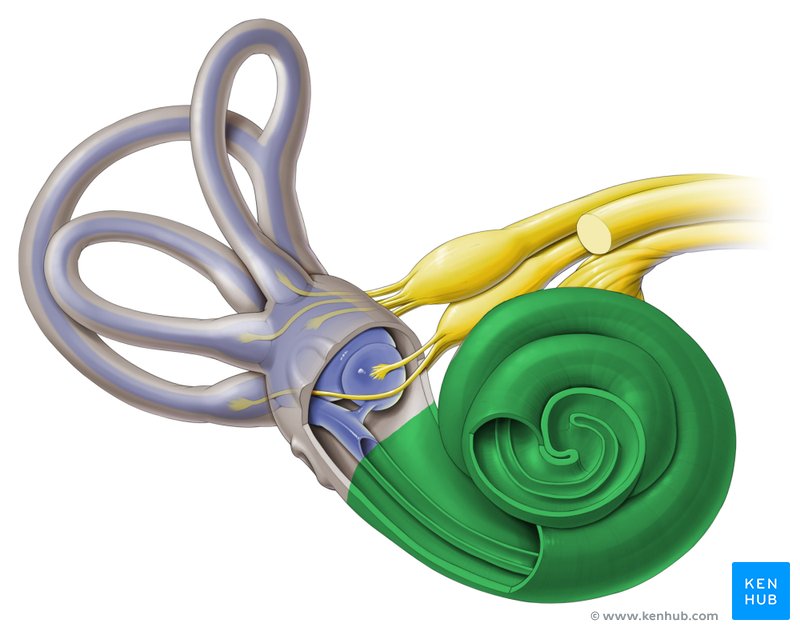
| 2 | CO | 7,8 | Spiral cavity of the inner ear |
| 1 | CO | 4 | Silver Pacific salmon |
| 1 | EA | 4 | Every one, pronoun; or apiece, adv. |
| 1 | EC | 4 | Reflection of a sound, reverberation, noun/verb |
| 1 | EC | 10 | Keep track of what's nearby, the way dolphins and bats do, compound pangram verb |
| 1 | ET | 4 | Engrave metal, glass or stone (…ing); or corrode (…ed away by acid) |
| 1 | HA | 5 | Kosher in Islam |
| 1 | HA | 4 | Strong, well, fit (… & hearty); or Revolutionary War patriot Nathan |
| 1 | HA | 4 | Corridor, or Let’s Make a Deal’s Monty |
| 1 | HA | 4 | Nimbus (ring of light or glowing cloud) atop a saint, or Xbox shooter game |
| 1 | HA | 4 | Come to a complete & sudden stop, verb, gerund form is a pangram |
| 1 | HA | 5 | Emerge from an egg, verb |
| 1 | HA | 7 | Small axe |
| 1 | HA | 4 | Dislike intensely, verb/noun |
| 1 | HA | 4 | Archaic 3rd person singular present form of "possess" (Hell … no fury) |
| 1 | HA | 5 | Yoga type that pairs poses with breathing |
| 1 | HE | 4 | Recover from injury |
| 1 | HE | 6 | Physical well-being (in sickness & in …) |
| 1 | HE | 4 | Warm up in the oven, verb; or extreme warmth, noun, adv. form is a pangram |
| 1 | HE | 5 | Candy bar with toffee & milk chocolate, actor Ledger, or British field |
| 1 | HE | 4 | Back of your foot (Achilles’ weakness), noun; or (of a dog) follow closely |
| 1 | HE | 4 | Satan’s domain |
| 1 | HE | 7 | Fierce, bad-tempered, or malicious person; or a muscle car, compound |
| 1 | HE | 8 | Satan’s pit; an oppressive or unbearable place; compound noun |
| 1 | HE | 5 | Phone greeting |
| 1 | HO | 4 | Golf ball target (get a …-in-one), noun/verb |
| 1 | HO | 4 | Otter den |
| 1 | HO | 5 | Cheap liquor |
| 1 | HO | 4 | Owl sound, noun/verb |
| 1 | HO | 5 | Place to stay when traveling (Eagles “… California”) |
| 1 | LA | 5 | Door, window, or gate fastener, noun; or to close one, verb (UN- form is a pangram) |
| 1 | LA | 4 | Flat strip of wood, often plastered as wallboard |
| 1 | LA | 5 | Wood-shaping machine, noun/verb, gerund form is a pangram |
| 1 | LE | 5 | Dissolve out by percolating liquid, verb; or “Lifestyles of the Rich & Famous” host Robin |
| 1 | LE | 4 | Womanizer, derogatory slang abbr., or former Polish president Wałęsa |
| 1 | LE | 5 | Bloodsucking worm, noun; habitually exploit or rely on, verb, gerund form is a pangram |
| 1 | LE | 6 | Fatal (“… Weapon” films), negative form is a pangram |
| 1 | LO | 5 | Fish family that includes the “clown”, or English filmmaker Ken (“I, Daniel Blake”) |
| 2 | LO | 5,6 | Reluctant (to), adj.; often confused with verb ending in E meaning “hate” |
| 1 | LO | 4 | Scottish body of water where Nessie lives |
| 1 | OA | 4 | Vow or pledge (you’re under one in court testimony) |
| 1 | TA | 4 | Dashboard engine RPM gauge abbr. |
| 1 | TE | 5 | What professors do |
| 1 | TE | 4 | Last word in name of Cambridge school M.I.T., abbr. |
| 1 | TE | 5 | What you use to chew, plural |
| 1 | TE | 6 | When the things you use to chew start to emerge, you chew on everything, and you drool all the time |
| 1 | TE | 10 | Medical care over the phone or video chat |
| 1 | TH | 4 | Pronoun for the other thing (this & …) |
| 1 | TH | 6 | Straw roof covering |
| 1 | TH | 4 | Archaic form of “you” |
| 1 | TH | 5 | 8th Greek letter, Θ |
| 1 | TO | 5 | What you chew with |
| 1 | TO | 9 | Pain in the body part you chew with, compound |
This site provides clues for a day's New York Times Spelling Bee puzzle. It follows in Kevin Davis' footsteps. The original set of 4,500 clues came from him, and they still make up about three quarters of the current clue set.
The "Bee Roots" approach is to provide explicit clues for root words, not every word. As logophiles, we are pretty good at putting on prefixes and suffixes, changing tense, and forming plurals (including Latin plurals!). The clues cover root words, arranged alphabetically by root word, with a count of words in the puzzle that come from each root. For example, if a puzzle includes ROAM and ROAMING, there will be a clue for ROAM and a count of 2. The root may not appear in the puzzle at all; for example, the 2021-07-23 Bee included ICED, DEICE, and DEICED. For such a puzzle, the clue would be for ICE with a word count of 3.
The Bee Roots approach involves judgement sometimes. For example, if a puzzle includes LOVE, LOVED, and LOVELY, how many roots are needed to cover them? LOVE and LOVED share the root LOVE, certainly, but LOVELY is tricky. LOVE is part of its etymology, but by now, the word means "exquisitely beautiful," which is a lot farther from the meaning of LOVE than swithcing to past tense. I'm inclined to treat LOVE and LOVELY as separate roots. You may not agree, which is fine. Another thing we logophiles share is a LOVE of arguing about words on social media.
A few words can have one meaning as a suffixed form and another as a stand-alone word. EVENING, for example. In those cases I will use the meaning that I think is more common.
One last complication, until another one pops up: a few roots have multiple spellings, for example LOLLYGAG and LALLYGAG. Depending on the day's letters, and maybe even the editor's whims, one or both could be in the puzzle's answer list. With such roots, you could see a word count of 2, even if there are no applicable prefixes or suffixes.
I will do my best to keep this site up to date and helpful (I hope). Check it out, and tweet feedback to @donswartwout Tweet to @donswartwout