- Letters: O/DEHNWY
- Words: 42
- Points: 185
- Pangrams: 1
|
The table provides clues for the roots of words in today's NY Times Spelling Bee. You're responsible for prefixes, suffixes,
tense changes, plurals, doubling consonants before suffixes, and alternate spellings of roots. An exception:
since Sam won't allow S, when the root contains an S, the clue may be for a plural or suffixed form. "Mice" for example.
If a clue isn't self-explanatory, try googling it. And if AI tries to be too helpful, try prefixing your search with "word for" or "word meaning".
The TL;DR about the site comes after the table.
Past clues are available here |
Today's puzzle
| |
|
Table content
|
| answers covered | answer's first two letters | answer's length | clue for root (answer may need prefix, suffix, tense change, alt spelling, ...) |
|---|---|---|---|
| 1 | DO | 4 | Extinct bird; or stupid person, slang |
| 1 | DO | 6 | Put on (… we now our gay apparel) |
| 1 | DO | 5 | Give to a good cause |
| 1 | DO | 4 | Finished (with a task) |
| 1 | DO | 5 | Frumpy, adj. |
| 3 | DO | 4,5,6 | ↓ elevator button you push to go to the lobby from a higher floor; or soft feathers that keep ducks warm |
| 2 | DO | 5,7 | Most respected or senior person in a particular field, ♂ + ♀ terms |
| 2 | EN | 5,7 | Bequeath $, or given by "…ed by their Creator with certain unalienable rights" |
| 1 | HO | 4 | Use a long-handled gardening tool with a thin metal blade |
| 1 | HO | 7 | Social gathering with lively folk dancing, compound |
| 2 | HO | 4,5 | Sharpen (a blade or skill) |
| 2 | HO | 5,7 | Sweet bee syrup |
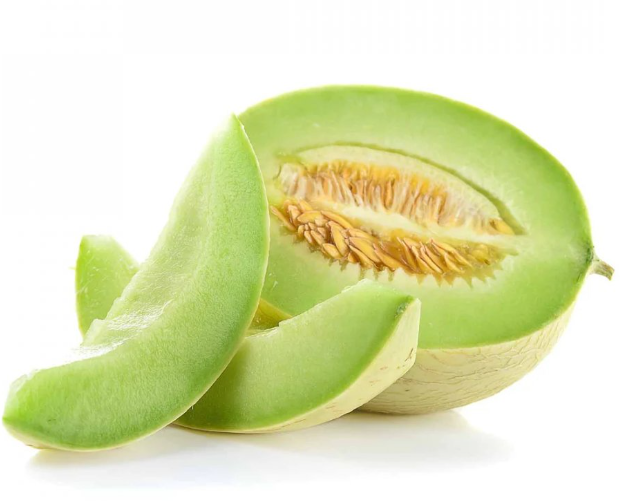
| 1 | HO | 8 | Melon with smooth pale skin and sweet green flesh, compound pangram |
| 2 | HO | 4,6 | “Little Red Riding …” noggin covering |
| 1 | HO | 6 | Column of weathered rocks, or black magic; rhyming word |
| 1 | HO | 5 | Nonsense, slang (a bunch of…) |
| 1 | HO | 5 | Informal hello, especially associated with the American west; or the first half of the name of a 1950's children's TV puppet |
| 1 | NE | 4 | Atomic number 10, gas in lighted signs |
| 1 | NO | 6 | Move your head up and down a little, usually to signal agreement, verb/noun |
| 1 | NO | 4 | Connecting point |
| 1 | NO | 5 | Used, especially in jocular or dialectal speech, to emphasize a negative, compound |
| 1 | NO | 4 | Quantity of zero; “all” antonym |
| 1 | NO | 4 | 12:00, midday, 🕛 |
| 1 | OD | 5 | Greek or Roman building used for musical performances (smaller than theaters) |
| 1 | OW | 4 | Have an obligation to pay or repay |
| 1 | OW | 5 | Possess, verb; or something that belongs to you, pronoun (I got QB on my …) |
| 1 | WO | 5 | Seek the favor or support of someone; or try to convince someone to marry you |
| 4 | WO | 4,5,6,6 | Forest (Pooh’s “100 acre …”) or tree flesh, noun |
| 1 | WO | 6 | Rhyming exclamation of excitement or joy (Homer Simpson) |
| 1 | WO | 5 | Exclamanation expressing astonishment or admiration; or greatly impress someone, verb |
| 1 | YO | 4 | Archaic for “over there;” usually has BE– prefix (Bed, Bath, & Be…) or –ER suffix (wild blue …er) |
| 1 | YO | 6 | “Hey, over here!” exclamation, or chocolate drink brand |
This site provides clues for a day's New York Times Spelling Bee puzzle. It follows in Kevin Davis' footsteps. The original set of 4,500 clues came from him, and they still make up about three quarters of the current clue set.
The "Bee Roots" approach is to provide explicit clues for root words, not every word. As logophiles, we are pretty good at putting on prefixes and suffixes, changing tense, and forming plurals (including Latin plurals!). The clues cover root words, arranged alphabetically by root word, with a count of words in the puzzle that come from each root. For example, if a puzzle includes ROAM and ROAMING, there will be a clue for ROAM and a count of 2. The root may not appear in the puzzle at all; for example, the 2021-07-23 Bee included ICED, DEICE, and DEICED. For such a puzzle, the clue would be for ICE with a word count of 3.
The Bee Roots approach involves judgement sometimes. For example, if a puzzle includes LOVE, LOVED, and LOVELY, how many roots are needed to cover them? LOVE and LOVED share the root LOVE, certainly, but LOVELY is tricky. LOVE is part of its etymology, but by now, the word means "exquisitely beautiful," which is a lot farther from the meaning of LOVE than swithcing to past tense. I'm inclined to treat LOVE and LOVELY as separate roots. You may not agree, which is fine. Another thing we logophiles share is a LOVE of arguing about words on social media.
A few words can have one meaning as a suffixed form and another as a stand-alone word. EVENING, for example. In those cases I will use the meaning that I think is more common.
One last complication, until another one pops up: a few roots have multiple spellings, for example LOLLYGAG and LALLYGAG. Depending on the day's letters, and maybe even the editor's whims, one or both could be in the puzzle's answer list. With such roots, you could see a word count of 2, even if there are no applicable prefixes or suffixes.
I will do my best to keep this site up to date and helpful (I hope). Check it out, and tweet feedback to @donswartwout Tweet to @donswartwout