- Letters: E/CDHIPU
- Words: 51
- Points: 224
- Pangrams: 2
|
The table provides clues for the roots of words in today's NY Times Spelling Bee. You're responsible for prefixes, suffixes,
tense changes, plurals, doubling consonants before suffixes, and alternate spellings of roots. An exception:
since Sam won't allow S, when the root contains an S, the clue may be for a plural or suffixed form. "Mice" for example.
If a clue isn't self-explanatory, try googling it. And if AI tries to be too helpful, try prefixing your search with "word for" or "word meaning".
The TL;DR about the site comes after the table.
Past clues are available here |
Today's puzzle
| |
|
Table content
|
| answers covered | answer's first two letters | answer's length | clue for root (answer may need prefix, suffix, tense change, alt spelling, ...) |
|---|---|---|---|
| 2 | CE | 4,5 | Give up (power or territory) |
| 2 | CH | 5,7 | Make a baby bird sound |
| 2 | CH | 5,6 | Scold |
| 1 | CH | 7 | Gambling token you cash in; or a little piece of something; or a short shot in golf, noun/verb |
| 1 | CU | 4 | Something that signals an actor or other performer, noun/verb |
| 1 | CU | 6 | Small bowl with a handle that you can drink from, noun/verb |
| 2 | DE | 6,7 | Make up one’s mind |
| 2 | DE | 6,7 | Draw a logical conclusion |
| 2 | DE | 4,6 | Property ownership paper, noun; or to transfer ownership, verb |
| 1 | DE | 4 | Not shallow |
| 1 | DE | 7 | Killing of a god, noun |
| 1 | DE | 5 | A playing card with the number 2 on it (the … of spades), noun |
| 2 | DE | 5,6 | Frozen water |
| 2 | DI | 4,5 | Spotted cubes you roll, noun; or chop into cubes, verb |
| 1 | DI | 4 | Cease to live |
| 1 | DI | 6 | Put something down quickly into liquid, verb; or brief swim, noun |
| 1 | DU | 4 | Slang for “guy” (Aerosmith “… Looks Like a Lady”), noun; dress up elaborately, verb |
| 2 | DU | 4,5 | Trick (… into) |
| 1 | ED | 6 | Water swirl, NOT clothier Bauer |
| 2 | ED | 5,6 | Formal verb meaning to draw out something hidden |
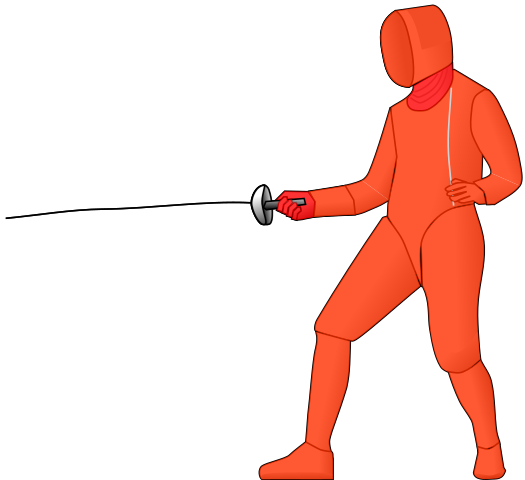
| 1 | EP | 4 | Fencing sword |
| 1 | EP | 4 | Long poem celebrating heroic feats, noun; or historically important, adj. (… struggle, … quest) |
| 2 | HE | 4,6 | Pay attention to (you didn’t … my advice) |
| 2 | HI | 8,9 | Involuntary spasm of the diaphragm and respiratory organs, with a sudden closure of the glottis and a sound like a cough (subject of a wide range of home remedies); verb/noun, past tense is a pangram (two spellings) |
| 1 | HI | 4 | Stay out of sight (play “… & seek”), verb; or animal skin, noun |
| 1 | HI | 6 | Typical Woodstock attendee, 1960s counterculture member |
| 1 | HU | 4 | Color or shade |
| 1 | IC | 4 | Frozen water |
| 1 | PE | 4 | Urinate, slang |
| 2 | PE | 4,6 | Baby bird sound, Easter marshmallow, or a furtive look |
| 1 | PE | 6 | Energy, liveliness, noun/verb |
| 2 | PI | 5,6 | Section of something larger (homophone of “tranquility” term), noun; or assemble (… together), verb |
| 1 | PI | 4 | Multicolored (… Piper of Hamelin) |
| 2 | PI | 4,5 | Copper or plastic tube that carries water, noun; or to move liquid in one, verb; decorate a cake with icing |
| 1 | PU | 4 | Dark red or purple-brown color |
| 1 | UP | 5 | Toward a higher place, position, or volume (turn … the music), adv./prep./adj./noun/verb |
This site provides clues for a day's New York Times Spelling Bee puzzle. It follows in Kevin Davis' footsteps. The original set of 4,500 clues came from him, and they still make up about three quarters of the current clue set.
The "Bee Roots" approach is to provide explicit clues for root words, not every word. As logophiles, we are pretty good at putting on prefixes and suffixes, changing tense, and forming plurals (including Latin plurals!). The clues cover root words, arranged alphabetically by root word, with a count of words in the puzzle that come from each root. For example, if a puzzle includes ROAM and ROAMING, there will be a clue for ROAM and a count of 2. The root may not appear in the puzzle at all; for example, the 2021-07-23 Bee included ICED, DEICE, and DEICED. For such a puzzle, the clue would be for ICE with a word count of 3.
The Bee Roots approach involves judgement sometimes. For example, if a puzzle includes LOVE, LOVED, and LOVELY, how many roots are needed to cover them? LOVE and LOVED share the root LOVE, certainly, but LOVELY is tricky. LOVE is part of its etymology, but by now, the word means "exquisitely beautiful," which is a lot farther from the meaning of LOVE than swithcing to past tense. I'm inclined to treat LOVE and LOVELY as separate roots. You may not agree, which is fine. Another thing we logophiles share is a LOVE of arguing about words on social media.
A few words can have one meaning as a suffixed form and another as a stand-alone word. EVENING, for example. In those cases I will use the meaning that I think is more common.
One last complication, until another one pops up: a few roots have multiple spellings, for example LOLLYGAG and LALLYGAG. Depending on the day's letters, and maybe even the editor's whims, one or both could be in the puzzle's answer list. With such roots, you could see a word count of 2, even if there are no applicable prefixes or suffixes.
I will do my best to keep this site up to date and helpful (I hope). Check it out, and tweet feedback to @donswartwout Tweet to @donswartwout