- Letters: O/AHILNT
- Words: 55
- Points: 262
- Pangrams: 2
|
The table provides clues for the roots of words in today's NY Times Spelling Bee. You're responsible for prefixes, suffixes,
tense changes, plurals, doubling consonants before suffixes, and alternate spellings of roots. An exception:
since Sam won't allow S, when the root contains an S, the clue may be for a plural or suffixed form. "Mice" for example.
If a clue isn't self-explanatory, try googling it.
The TL;DR about the site comes after the table.
Past clues are available here |
Today's puzzle
| |
|
Table content
|
| answers covered | answer's first two letters | answer's length | clue for root (answer may need prefix, suffix, tense change, alt spelling, ...) |
|---|---|---|---|
| 1 | AI | 5 | Garlic mayonnaise, from French for garlic |
| 1 | AL | 5 | Apportion $ or other resource (time, e.g.) |
| 1 | AL | 5 | Hawaiian greeting |
| 1 | AL | 4 | Sax smaller than a tenor, or voice higher than one |
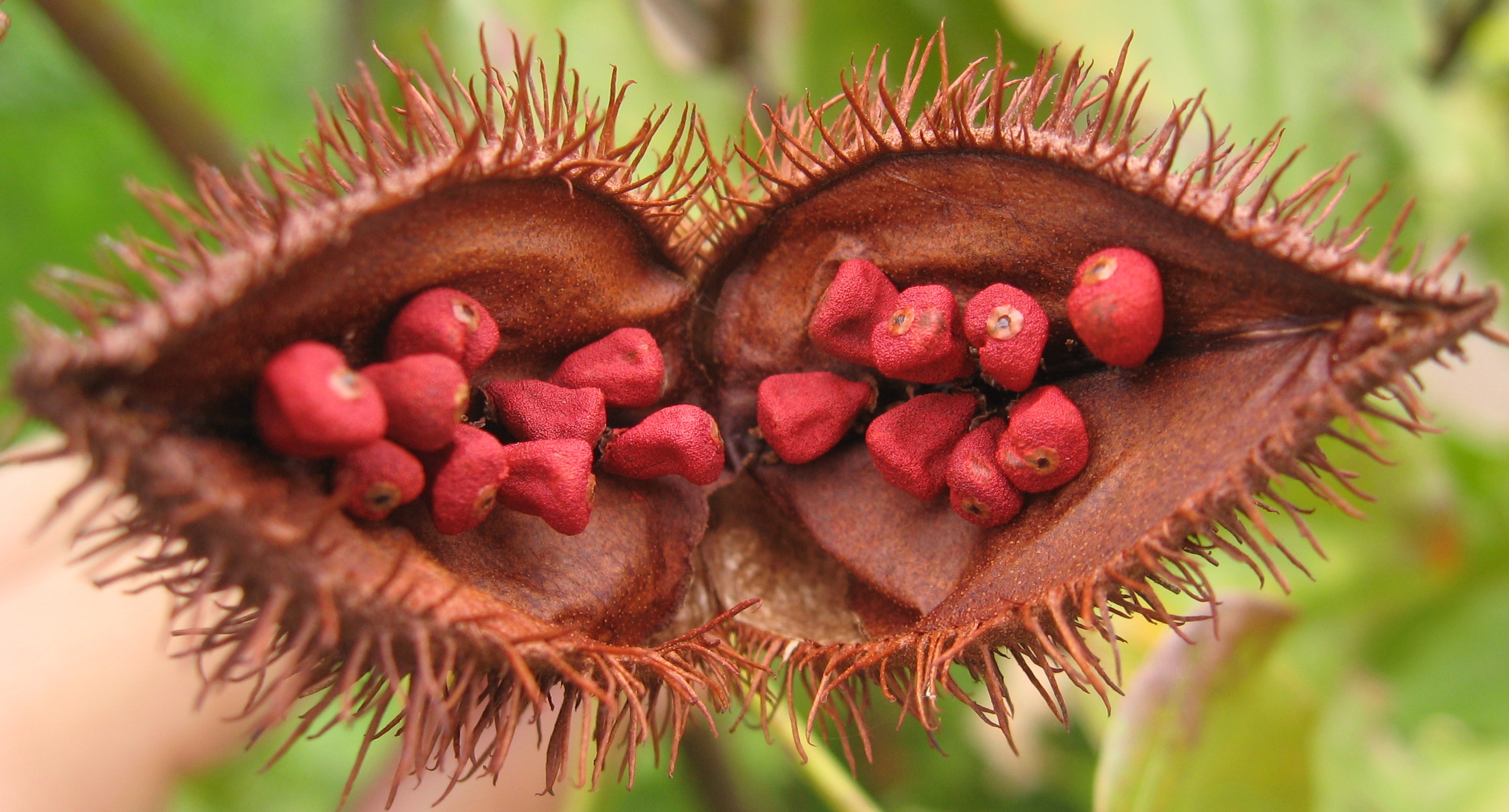
| 1 | AN | 7 | Orange-red dye obtained from the pulp of a tropical fruit, used for coloring foods and fabric; also used as a condiment; or the tree it comes from (Bixa orellana) |
| 1 | AN | 12 | Utterly destroy, obliterate, pangram, and so are its gerund and noun forms |
| 1 | AN | 6 | Ceremonially smear someone with oil, or designate as a successor |
| 1 | AN | 4 | Soon, poetically |
| 1 | AN | 5 | Atom or molecule with a net electric charge |
| 1 | AN | 10 | Write something, for example music, in a specialized system; or write comments in the margins of a book |
| 1 | AT | 5 | Coral island (Bikini, e.g.) |
| 1 | AT | 6 | Character of sound, a sound (dial or ring-); noun; give greater strength or firmness to a body or a muscle; verb |
| 1 | HA | 4 | Nimbus (ring of light or glowing cloud) atop a saint, or Xbox shooter game |
| 1 | HO | 4 | Otter den |
| 1 | HO | 4 | Owl sound, noun/verb |
| 1 | IN | 10 | The phase of breathing that expands your chest, noun form is a pangram |
| 1 | IN | 10 | Cause to begin, or admit into a secret society; verb; or novice, noun |
| 1 | IN | 4 | Enter (go … the room), preposition |
| 1 | IN | 10 | Character of sound, a sound (dial or ring-); noun; give greater strength or firmness to a body or a muscle; verb |
| 1 | IO | 4 | 9th Greek letter, I; or extremely small amount |
| 1 | LA | 7 | Sheep (wool) oil, used as skin moisturizer |
| 1 | LI | 4 | Roaring animal that travels in a pride (… King) |
| 1 | LI | 5 | Print made with a flat surface treated so as to repel the ink except where it is required for printing |
| 1 | LL | 5 | South American grassy plain |
| 1 | LO | 4 | Borrowed $, noun/verb |
| 1 | LO | 5 | Reluctant (to), adj.; often confused with verb ending in E meaning “hate” |
| 1 | LO | 4 | Sex organ region of body (fruit of my …s); anagram of “… King” animal |
| 1 | LO | 4 | Hang out or droop, as a dog’s tongue |
| 1 | LO | 4 | “Crazy” water bird on Canada $1 coin |
| 1 | LO | 4 | Pirate treasure, noun; or to steal during a riot, verb |
| 1 | LO | 6 | Moisturizing or suntan cream |
| 1 | LO | 5 | State-sponsored numbers betting ticket (Powerball, e.g.) |
| 2 | NA | 6,8 | Country, or temperance activist Carrie |
| 1 | NO | 9 | 1 followed 30 zeroes; Latin 9 prefix |
| 1 | NO | 4 | 12:00, midday, 🕛 |
| 1 | NO | 8 | Write something, for example music, in a specialized system; or write comments in the margins of a book |
| 1 | NO | 10 | Another word for margin comment (lop off 2 letters from the start of the other list word), or system of symbols (algebraic…) |
| 2 | NO | 6,8 | Vague idea, or small sewing accessory |
| 1 | OA | 4 | Vow or pledge (you’re under one in court testimony) |
| 1 | OL | 4 | Mixture, or spicy Spanish stew, NOT margarine |
| 1 | ON | 5 | Veg that makes you cry when cut (for some, this is the "dreaded root veg") |
| 1 | ON | 4 | Preposition when mounting an animal or boarding a large vehicle |
| 1 | TA | 5 | A bird of prey's claw |
| 1 | TA | 6 | Skin “ink” |
| 1 | TI | 11 | Stimulate or excite, especially in a sexual way |
| 1 | TO | 4 | Work hard (… away, trying to find the last few Spelling Bee words) |
| 1 | TO | 4 | Road use fee (paid at a booth) |
| 1 | TO | 5 | Character of sound, a sound (dial or ring-); noun; give greater strength or firmness to a body or a muscle; verb |
| 1 | TO | 4 | An implement (hammer & screwdriver, e.g.); often stored in a …box |
| 1 | TO | 4 | Animated film or character, slang abbr. (car…) |
| 1 | TO | 4 | Short horn sound; noun/verb |
| 1 | TO | 5 | What you chew with |
| 1 | TO | 5 | The whole amount (sum of numbers, e.g.) |
This site provides clues for a day's New York Times Spelling Bee puzzle. It follows in Kevin Davis' footsteps. The original set of 4,500 clues came from him, and they still make up about three quarters of the current clue set.
The "Bee Roots" approach is to provide explicit clues for root words, not every word. As logophiles, we are pretty good at putting on prefixes and suffixes, changing tense, and forming plurals (including Latin plurals!). The clues cover root words, arranged alphabetically by root word, with a count of words in the puzzle that come from each root. For example, if a puzzle includes ROAM and ROAMING, there will be a clue for ROAM and a count of 2. The root may not appear in the puzzle at all; for example, the 2021-07-23 Bee included ICED, DEICE, and DEICED. For such a puzzle, the clue would be for ICE with a word count of 3.
The Bee Roots approach involves judgement sometimes. For example, if a puzzle includes LOVE, LOVED, and LOVELY, how many roots are needed to cover them? LOVE and LOVED share the root LOVE, certainly, but LOVELY is tricky. LOVE is part of its etymology, but by now, the word means "exquisitely beautiful," which is a lot farther from the meaning of LOVE than swithcing to past tense. I'm inclined to treat LOVE and LOVELY as separate roots. You may not agree, which is fine. Another thing we logophiles share is a LOVE of arguing about words on Twitter.
A few words can have one meaning as a suffixed form and another as a stand-alone word. EVENING, for example. In those cases I will use the meaning that I think is more common.
One last complication, until another one pops up: a few roots have multiple spellings, for example LOLLYGAG and LALLYGAG. Depending on the day's letters, and maybe even the editor's whims, one or both could be in the puzzle's answer list. With such roots, you could see a word count of 2, even if there are no applicable prefixes or suffixes.
I will do my best to keep this site up to date and helpful (I hope). Check it out, and tweet feedback to @donswartwout Tweet to @donswartwout