- Letters: A/EMNPTV
- Words: 62
- Points: 229
- Pangrams: 1
|
The table provides clues for the roots of words in today's NY Times Spelling Bee. You're responsible for prefixes, suffixes,
tense changes, plurals, doubling consonants before suffixes, and alternate spellings of roots. An exception:
since Sam won't allow S, when the root contains an S, the clue may be for a plural or suffixed form. "Mice" for example.
If a clue isn't self-explanatory, try googling it.
The TL;DR about the site comes after the table.
Past clues are available here |
Today's puzzle
| |
|
Table content
|
| answers covered | answer's first two letters | answer's length | clue for root (answer may need prefix, suffix, tense change, alt spelling, ...) |
|---|---|---|---|
| 1 | AM | 4 | Prayer-ending word |
| 1 | AN | 4 | $ to join a poker game, or “before” prefix |
| 2 | AN | 7,8 | It picks up TV or radio signals |
| 2 | AP | 6,6 | Tarzan the … |
| 1 | AP | 5 | Sleep breathing disorder |
| 1 | AT | 7 | Make an effort to achieve or complete something, verb/noun |
| 1 | EA | 5 | Consume food |
| 1 | EA | 4 | Roof overhang, NOT Adam’s mate |
| 1 | EM | 7 | Flow or originate from (warmth from a fireplace, e.g.) |
| 1 | EN | 5 | Rectal wash (Fleet, e.g.) |
| 2 | MA | 4,5 | ♀ parent, slang |
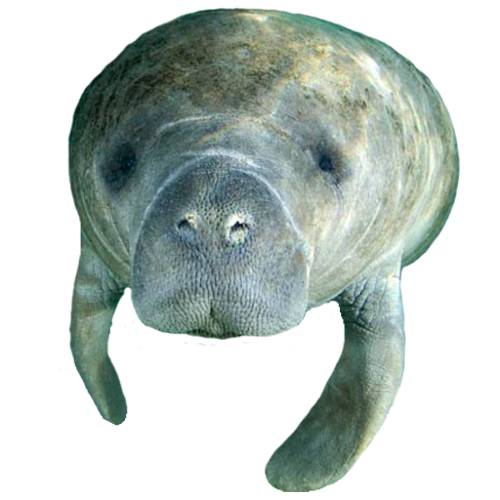
| 1 | MA | 7 | Florida creature AKA “sea cow” |
| 1 | MA | 4 | Hair on a horse or ♂ lion’s neck |
| 1 | MA | 5 | Exodus food from the sky |
| 1 | MA | 5 | Ray (fish) |
| 1 | MA | 4 | Fellow member (cast-…) or joint occupant (room-…) |
| 1 | MA | 5 | Dull finish on paint or photos |
| 1 | MA | 5 | Someone with deep knowledge of a subject who likes sharing their knowledge |
| 2 | ME | 4,5 | The average in math, noun; unkind, adj. (“… Girls”); or intend (I didn’t … to do it) |
| 1 | ME | 4 | Animal flesh for consumption (beef, ham, etc.) |
| 1 | ME | 4 | Beyond prefix, greek |
| 1 | NA | 4 | Indiaan flaat breaad |
| 1 | NA | 4 | What you’re called (Kevin or Susan, e.g.) |
| 1 | NA | 8 | Cloth strip sewn into clothing to identify the owner (compound made from what you're called and narrow strip of material) |
| 1 | NA | 4 | Grandma, slang; or Peter Pan dog |
| 1 | NA | 4 | Scruff of the neck |
| 1 | NA | 6 | Swimming or floating adj. from Latin |
| 1 | NA | 4 | Central part of a church building |
| 1 | NE | 4 | Tide with least difference between low & high water |
| 2 | NE | 4,6 | Tidy |
| 1 | PA | 5 | Song of praise or triumph |
| 1 | PA | 5 | S Am treeless grassland |
| 1 | PA | 6 | Cent. Am. country with a canal & hat |
| 1 | PA | 4 | Single sheet of window glass |
| 1 | PA | 4 | What a dog does when it’s hot, verb; or singular of trousers, noun |
| 1 | PA | 4 | Father, slang |
| 1 | PA | 4 | Chopped liver (… de foie gras) or other spréâd (French), or archaic for a person’s head |
| 2 | PA | 6,8 | Legal document that protects an invention |
| 1 | PA | 6 | Slow court dance from the 16th century |
| 1 | PA | 4 | Put asphalt on a road (… the way) |
| 1 | PA | 8 | The hard surface of a road or street, pangram |
| 1 | PE | 4 | Fuel from bog soil, NOT Secretary Buttigieg |
| 1 | PE | 6 | Archaic for writer; compound made from “ink stick” & ♂ |
| 1 | PE | 7 | Baseball banner |
| 1 | PE | 7 | Five-carbon chain |
| 1 | TA | 4 | Not wild, adj./verb |
| 1 | TA | 4 | Pack down (start of Florida city on a bay) |
| 1 | TA | 4 | Spanish bar snack (usually plural) |
| 1 | TA | 4 | Adhesive strip |
| 1 | TE | 4 | Group of sports players (Yankees, e.g.), noun; … up, verb |
| 1 | TE | 8 | A fellow player in your group, compound |
| 1 | TE | 4 | Nipple |
| 1 | TE | 6 | Person a landlord rents to, one of two or more of these is a pangram |
| 1 | VA | 4 | Blatantly set out to attract, verb/noun; or the upper front part of a boot or shoe |
| 1 | VA | 4 | Device that shows wind direction |
| 1 | VA | 4 | Smoke an e-cig |
This site provides clues for a day's New York Times Spelling Bee puzzle. It follows in Kevin Davis' footsteps. The original set of 4,500 clues came from him, and they still make up about three quarters of the current clue set.
The "Bee Roots" approach is to provide explicit clues for root words, not every word. As logophiles, we are pretty good at putting on prefixes and suffixes, changing tense, and forming plurals (including Latin plurals!). The clues cover root words, arranged alphabetically by root word, with a count of words in the puzzle that come from each root. For example, if a puzzle includes ROAM and ROAMING, there will be a clue for ROAM and a count of 2. The root may not appear in the puzzle at all; for example, the 2021-07-23 Bee included ICED, DEICE, and DEICED. For such a puzzle, the clue would be for ICE with a word count of 3.
The Bee Roots approach involves judgement sometimes. For example, if a puzzle includes LOVE, LOVED, and LOVELY, how many roots are needed to cover them? LOVE and LOVED share the root LOVE, certainly, but LOVELY is tricky. LOVE is part of its etymology, but by now, the word means "exquisitely beautiful," which is a lot farther from the meaning of LOVE than swithcing to past tense. I'm inclined to treat LOVE and LOVELY as separate roots. You may not agree, which is fine. Another thing we logophiles share is a LOVE of arguing about words on Twitter.
A few words can have one meaning as a suffixed form and another as a stand-alone word. EVENING, for example. In those cases I will use the meaning that I think is more common.
One last complication, until another one pops up: a few roots have multiple spellings, for example LOLLYGAG and LALLYGAG. Depending on the day's letters, and maybe even the editor's whims, one or both could be in the puzzle's answer list. With such roots, you could see a word count of 2, even if there are no applicable prefixes or suffixes.
I will do my best to keep this site up to date and helpful (I hope). Check it out, and tweet feedback to @donswartwout Tweet to @donswartwout