- Letters: C/ILNOUR
- Words: 43
- Points: 207
- Pangrams: 2
|
The table provides clues for the roots of words in today's NY Times Spelling Bee. You're responsible for prefixes, suffixes,
tense changes, plurals, doubling consonants before suffixes, and alternate spellings of roots. An exception:
since Sam won't allow S, when the root contains an S, the clue may be for a plural or suffixed form. "Mice" for example.
If a clue isn't self-explanatory, try googling it.
The TL;DR about the site comes after the table.
Past clues are available here |
Today's puzzle
| |
|
Table content
|
| answers covered | answer's first two letters | answer's length | clue for root (answer may need prefix, suffix, tense change, alt spelling, ...) |
|---|---|---|---|
| 1 | CI | 5 | Cloud forming wispy streaks (“mare's tails”) at high altitude |
| 1 | CL | 6 | Medical facility (health …) |
| 1 | CO | 5 | Spherical or nearly spherical bacterium |
| 1 | CO | 6 | Nest for butterfly larva, noun; or wrap up like one, verb |
| 1 | CO | 4 | Wind up spirally, verb/noun (Hamlet’s “mortal …”) |
| 1 | CO | 4 | Metal $, noun; or come up with a new phrase, verb |
| 1 | CO | 4 | Fiber from the outer husk of the coconut, used for making ropes & matting |
| 1 | CO | 5 | Baby or horse upset tummy |
| 2 | CO | 5,7 | : (punctuation mark), or intestine |
| 1 | CO | 5 | Red, green, blue, purple, etc. |
| 1 | CO | 6 | Agree, verb (I … with your opinion) |
| 1 | CO | 5 | Ice cream holder shape |
| 1 | CO | 4 | “Warm” antonym, or “neat!” |
| 1 | CO | 4 | Veg on a cob |
| 2 | CO | 7,9 | Elected or appointed group, noun (UN Security …, student …, or city …) |
| 1 | CR | 4 | Holey shoe, or alligator relative abbr. |
| 1 | CR | 5 | Small plant that blooms early in spring |
| 1 | CR | 5 | Hum or sing in a soft, low voice, especially in a sentimental manner (think Sinatra or Bublé) |
| 1 | CU | 4 | Remove unwanted from the herd |
| 1 | CU | 5 | Rare, unusual, or intriguing object (…cabinet) |
| 1 | CU | 4 | Cause to form into a curved or spiral shape, especially hair, verb/noun; or a weight lifting exercise to develop the biceps |
| 2 | IC | 4,6 | Symbol (you tap on phone screen, e.g.), adverb form is a pangram |
| 1 | IN | 5 | Become subject to (something unwelcome or unpleasant) as a result of one's own behavior or action (… debt) |
| 1 | IO | 5 | Atom or molecule with a net electric charge |
| 1 | IR | 6 | Wryly funny because it’s opposite to what’s expected (a fire station burns down, e.g,) |
| 1 | LO | 4 | Crazy, Spanish |
| 1 | LO | 4 | A particular point or place |
| 1 | NU | 6 | Papal ambassador |
| 1 | OC | 5 | Happen, exist, or come to mind (it never …-ed to me) |
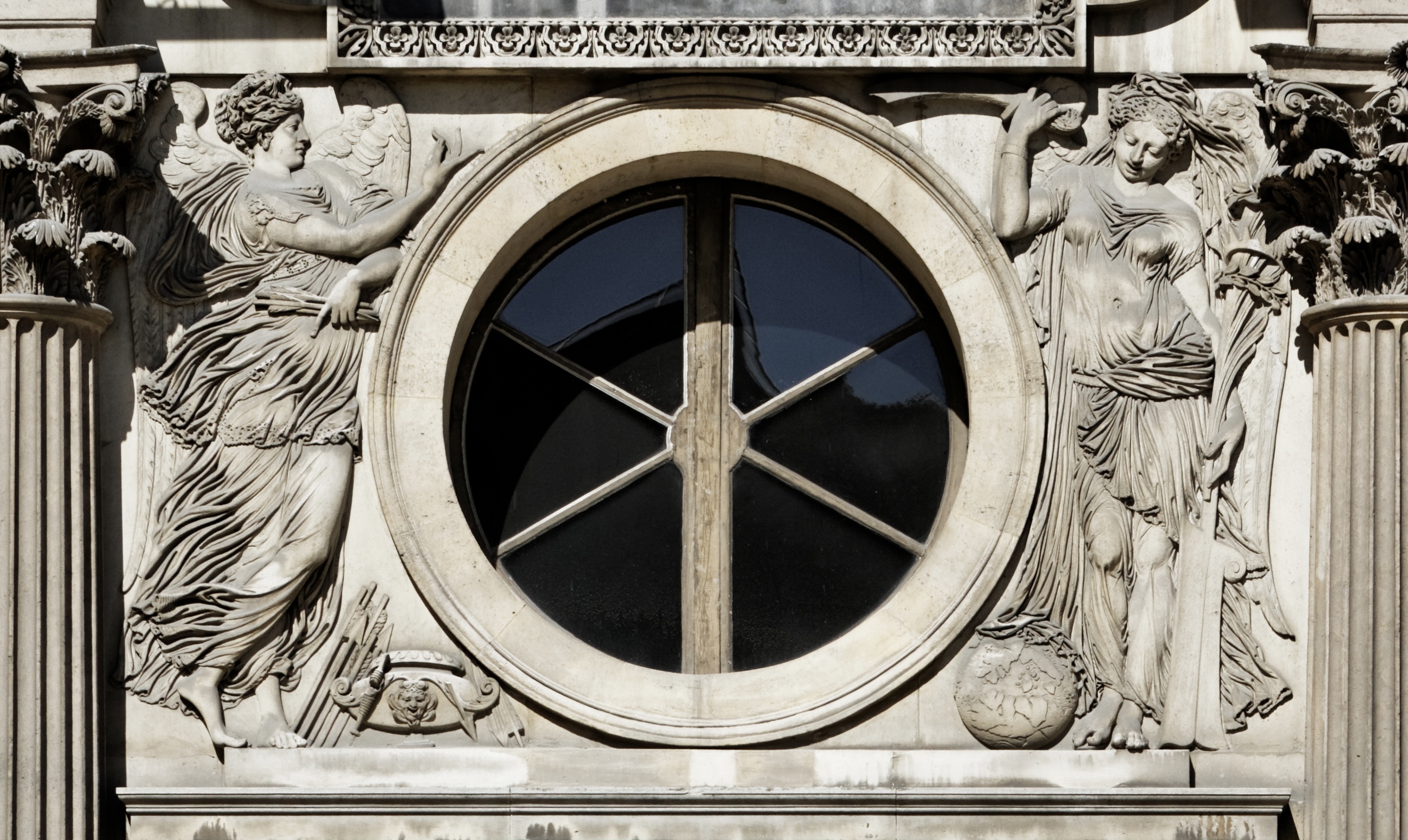
| 1 | OC | 5 | In architecture, an eye-like opening, for example a circular window, singular ends in S, but plural can appear in the Bee |
| 1 | RI | 5 | Poison from castor beans, NOT a pilaf grain |
| 1 | RO | 6 | Ornamental decorative style from the late Baroque |
| 1 | RU | 5 | Letter of an ancient Germanic alphabet |
| 1 | UN | 6 | Wind up spirally, verb/noun (Hamlet’s “mortal …”) |
| 1 | UN | 8 | Red, green, blue, purple, etc. |
| 1 | UN | 6 | “Warm” antonym, or “neat!” |
| 1 | UN | 6 | Cause to form into a curved or spiral shape, especially hair, verb/noun; or a weight lifting exercise to develop the biceps |
| 1 | UN | 8 | Wryly funny because it’s opposite to what’s expected (a fire station burns down, e.g,) |
| 1 | UN | 7 | Mythical 1–horned horse |
| 1 | UR | 4 | Medical adj. for pee (… acid) |
This site provides clues for a day's New York Times Spelling Bee puzzle. It follows in Kevin Davis' footsteps. The original set of 4,500 clues came from him, and they still make up about three quarters of the current clue set.
The "Bee Roots" approach is to provide explicit clues for root words, not every word. As logophiles, we are pretty good at putting on prefixes and suffixes, changing tense, and forming plurals (including Latin plurals!). The clues cover root words, arranged alphabetically by root word, with a count of words in the puzzle that come from each root. For example, if a puzzle includes ROAM and ROAMING, there will be a clue for ROAM and a count of 2. The root may not appear in the puzzle at all; for example, the 2021-07-23 Bee included ICED, DEICE, and DEICED. For such a puzzle, the clue would be for ICE with a word count of 3.
The Bee Roots approach involves judgement sometimes. For example, if a puzzle includes LOVE, LOVED, and LOVELY, how many roots are needed to cover them? LOVE and LOVED share the root LOVE, certainly, but LOVELY is tricky. LOVE is part of its etymology, but by now, the word means "exquisitely beautiful," which is a lot farther from the meaning of LOVE than swithcing to past tense. I'm inclined to treat LOVE and LOVELY as separate roots. You may not agree, which is fine. Another thing we logophiles share is a LOVE of arguing about words on Twitter.
A few words can have one meaning as a suffixed form and another as a stand-alone word. EVENING, for example. In those cases I will use the meaning that I think is more common.
One last complication, until another one pops up: a few roots have multiple spellings, for example LOLLYGAG and LALLYGAG. Depending on the day's letters, and maybe even the editor's whims, one or both could be in the puzzle's answer list. With such roots, you could see a word count of 2, even if there are no applicable prefixes or suffixes.
I will do my best to keep this site up to date and helpful (I hope). Check it out, and tweet feedback to @donswartwout Tweet to @donswartwout