- Letters: N/CGIRUV
- Words: 35
- Points: 213
- Pangrams: 1
|
The table provides clues for the roots of words in today's NY Times Spelling Bee. You're responsible for prefixes, suffixes,
tense changes, plurals, doubling consonants before suffixes, and alternate spellings of roots. An exception:
since Sam won't allow S, when the root contains an S, the clue may be for a plural or suffixed form. "Mice" for example.
If a clue isn't self-explanatory, try googling it.
The TL;DR about the site comes after the table.
Past clues are available here |
Today's puzzle
| |
|
Table content
|
| answers covered | answer's first two letters | answer's length | clue for root (answer may need prefix, suffix, tense change, alt spelling, ...) |
|---|---|---|---|
| 1 | CR | 8 | Bend the head and/or body in fear or in a servile manner |
| 1 | CU | 5 | Something that signals an actor or other performer, noun/verb |
| 1 | CU | 7 | Skill in achieving one’s ends by deceit (…thieves evaded the alarm) , adj. |
| 1 | CU | 6 | Heal someone, verb/noun; or preserve meat or fish by salting, drying, or smoking, verb |
| 1 | CU | 7 | A line that bends, noun/verb (… ball) |
| 1 | GI | 7 | Live performance by or engagement for a musician or group, especially playing pop or jazz; noun/verb |
| 1 | GI | 7 | Clear alcoholic spirit flavored with juniper berries; or card game, noun/verb; or device for separating cotton seeds from fibers, noun/verb |
| 1 | GI | 6 | Opposite of take |
| 2 | GR | 4,8 | Smile broadly, verb/noun |
| 1 | GU | 7 | Lethal weapon that shoots bullets; slang term for someone who uses it (hired …), noun/verb |
| 1 | IC | 5 | Frozen water |
| 2 | IN | 5,9 | Become subject to (something unwelcome or unpleasant) as a result of one's own behavior or action (… debt) |
| 1 | IN | 6 | A baseball game is divided into 9 of these |
| 1 | IN | 7 | Accustom someone to something unpleasant |
| 1 | IN | 8 | Transfer ashes to a ceramic receptacle after cremation (similar in construction to enhalo), verb |
| 1 | IN | 5 | Vase used for storing ashes |
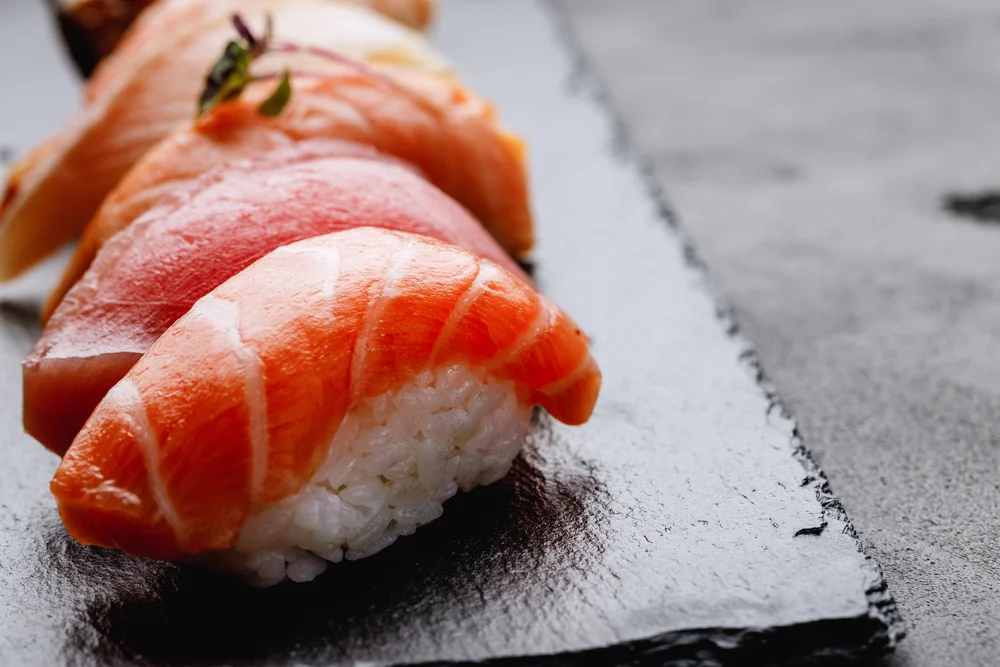
| 1 | NI | 6 | Sushi consisting of a small ball of rice smeared with wasabi sauce and topped with raw fish or other seafood |
| 1 | RI | 6 | Swamp grass which is widely cultivated as a source of food, especially in Asia, noun; or force cooked potatoes or other vegetables through a sieve, verb |
| 1 | RI | 5 | Poison from castor beans, NOT a pilaf grain |
| 1 | RI | 7 | Make a boat ready for sailing by providing it with sails and rope (gerund form can also be a noun); or an apparatus for drilling or pumping oil |
| 2 | RI | 4,7 | Make a bell sound, verb/noun; encircle, verb/noun |
| 1 | RU | 4 | Make a bell sound, verb/noun; encircle, verb/noun |
| 1 | RU | 5 | Regret, verb; or perennial evergreen shrub with bitter strong-scented lobed leaves, noun |
| 2 | RU | 4,7 | Destroy, verb (eating snacks before dinner will … your appetite) |
| 1 | RU | 7 | Move fast on foot |
| 1 | RU | 5 | Letter of an ancient Germanic alphabet |
| 1 | UN | 8 | Opposite of take |
| 2 | UN | 5,9 | Make a boat ready for sailing by providing it with sails and rope (gerund form can also be a noun); or an apparatus for drilling or pumping oil |
| 1 | UR | 6 | Strong desire or impulse, noun/verb |
| 1 | VI | 6 | Someone who has never had sex |
This site provides clues for a day's New York Times Spelling Bee puzzle. It follows in Kevin Davis' footsteps. The original set of 4,500 clues came from him, and they still make up about three quarters of the current clue set.
The "Bee Roots" approach is to provide explicit clues for root words, not every word. As logophiles, we are pretty good at putting on prefixes and suffixes, changing tense, and forming plurals (including Latin plurals!). The clues cover root words, arranged alphabetically by root word, with a count of words in the puzzle that come from each root. For example, if a puzzle includes ROAM and ROAMING, there will be a clue for ROAM and a count of 2. The root may not appear in the puzzle at all; for example, the 2021-07-23 Bee included ICED, DEICE, and DEICED. For such a puzzle, the clue would be for ICE with a word count of 3.
The Bee Roots approach involves judgement sometimes. For example, if a puzzle includes LOVE, LOVED, and LOVELY, how many roots are needed to cover them? LOVE and LOVED share the root LOVE, certainly, but LOVELY is tricky. LOVE is part of its etymology, but by now, the word means "exquisitely beautiful," which is a lot farther from the meaning of LOVE than swithcing to past tense. I'm inclined to treat LOVE and LOVELY as separate roots. You may not agree, which is fine. Another thing we logophiles share is a LOVE of arguing about words on Twitter.
A few words can have one meaning as a suffixed form and another as a stand-alone word. EVENING, for example. In those cases I will use the meaning that I think is more common.
One last complication, until another one pops up: a few roots have multiple spellings, for example LOLLYGAG and LALLYGAG. Depending on the day's letters, and maybe even the editor's whims, one or both could be in the puzzle's answer list. With such roots, you could see a word count of 2, even if there are no applicable prefixes or suffixes.
I will do my best to keep this site up to date and helpful (I hope). Check it out, and tweet feedback to @donswartwout Tweet to @donswartwout