- Letters: K/ABELNO
- Words: 39
- Points: 134
- Pangrams: 1
|
The table provides clues for the roots of words in today's NY Times Spelling Bee. You're responsible for prefixes, suffixes,
tense changes, plurals, doubling consonants before suffixes, and alternate spellings of roots. An exception:
since Sam won't allow S, when the root contains an S, the clue may be for a plural or suffixed form. "Mice" for example.
If a clue isn't self-explanatory, try googling it.
The TL;DR about the site comes after the table.
Past clues are available here |
Today's puzzle
| |
|
Table content
|
| answers covered | answer's first two letters | answer's length | clue for root (answer may need prefix, suffix, tense change, alt spelling, ...) |
|---|---|---|---|
| 1 | AN | 5 | Joint between foot & shin |
| 1 | AN | 9 | Part of the skeleton that connects your foot to your leg, compound pangram (the plural is often in Bee as “tali”) |
| 1 | BA | 5 | Sweet braided Jewish bread, often with chocolate filling |
| 1 | BA | 4 | Cook (bread or cookies, e.g.) in an oven, verb |
| 1 | BA | 4 | Hesitate or be unwilling to accept an idea or undertaking; or illegal move by a pitcher in baseball |
| 2 | BA | 4,8 | Where you save your money (piggy … or … of America); or the side of a river; with a suitable prefix, becomes a verb, and with a suitable prefix and suffix, becomes a pangram |
| 1 | BE | 4 | Bird bill |
| 1 | BL | 5 | Space left to be filled in a document, noun; or cartridge containing gunpowder but no bullet, noun; or not written on, adj. (… slate) |
| 1 | BL | 5 | Dreary, grim, or depressing; adj. (Dickens' “… House”) |
| 1 | BL | 5 | Brit & Aussie slang for guy |
| 1 | BO | 4 | Hit your head (1960s “Batman” sound effect), or have sex with in Brit slang |
| 2 | BO | 4,8 | Printed novel, noun; or reserve something, verb |
| 1 | KA | 4 | Trendy lettuce (but really leaf cabbage) |
| 1 | KA | 5 | Meat on a skewer (shish …) |
| 1 | KE | 5 | Meat on a skewer (shish …) |
| 1 | KE | 4 | Bottom stabilizing ridge of a boat or ship, noun; or capsize, verb (… over) |
| 1 | KE | 4 | Eager (peachy-…), adj.; or wail in grief, verb |
| 1 | KE | 6 | Dog or cat housing (where you leave them when away), noun; or put a pet in one, verb |
| 1 | KE | 4 | Betting game similar to bingo or lotto, often done at restaurants, where you pick numbers that you hope will be drawn |
| 1 | KN | 4 | Mid-leg joint, noun; or hit someone with one, verb |
| 1 | KN | 5 | Bend down & rest on above to pray, propose marriage, or protest during the National Anthem |
| 1 | KN | 5 | Slow ringing at a church that signifies death |
| 1 | KN | 4 | Radio volume or tuning dial, or door handle you turn |
| 1 | KN | 5 | Small mound (the grassy …) |
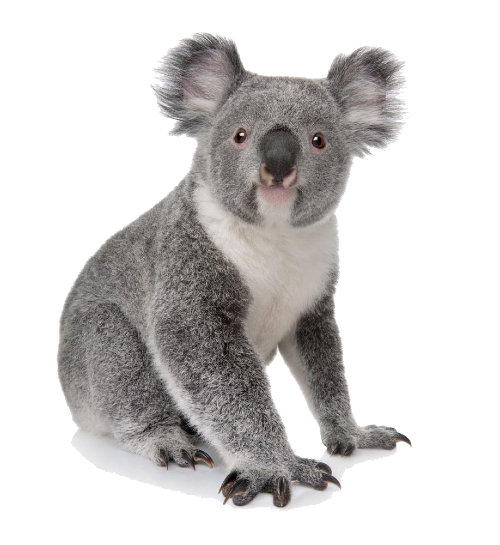
| 1 | KO | 5 | Tree climbing marsupial “bear” |
| 1 | KO | 4 | Zen Buddhist paradoxical riddle or story for meditation, anagram of Hawaiian district or coffee grown there |
| 1 | KO | 4 | Small African tree with nuts that flavor Pepsi |
| 1 | KO | 4 | Crazy or eccentric person, NOT a chef |
| 1 | LA | 4 | Large body of freshwater (Great ones are Erie, Superior, etc.) |
| 1 | LA | 4 | Of hair, long, limp, & straight; of a person (with –Y suffix), tall & thin |
| 1 | LE | 4 | Place where water escapes a pipe or hose, or info spilled to a reporter |
| 1 | LE | 4 | Veg similar to onion; homophone of place where water escapes a pipe |
| 1 | LO | 4 | Direct one’s gaze toward someone or something, verb/noun |
| 1 | LO | 8 | A collection of photographs compiled to show off a model, photographer, style, stylist, or clothing line, compound |
| 1 | NA | 7 | Yellowish cotton cloth or pants made from it, named for city in China |
| 1 | NO | 4 | Barnes & Noble e-reader, or secluded corner |
| 1 | OA | 5 | Tree that makes acorns |
This site provides clues for a day's New York Times Spelling Bee puzzle. It follows in Kevin Davis' footsteps. The original set of 4,500 clues came from him, and they still make up about three quarters of the current clue set.
The "Bee Roots" approach is to provide explicit clues for root words, not every word. As logophiles, we are pretty good at putting on prefixes and suffixes, changing tense, and forming plurals (including Latin plurals!). The clues cover root words, arranged alphabetically by root word, with a count of words in the puzzle that come from each root. For example, if a puzzle includes ROAM and ROAMING, there will be a clue for ROAM and a count of 2. The root may not appear in the puzzle at all; for example, the 2021-07-23 Bee included ICED, DEICE, and DEICED. For such a puzzle, the clue would be for ICE with a word count of 3.
The Bee Roots approach involves judgement sometimes. For example, if a puzzle includes LOVE, LOVED, and LOVELY, how many roots are needed to cover them? LOVE and LOVED share the root LOVE, certainly, but LOVELY is tricky. LOVE is part of its etymology, but by now, the word means "exquisitely beautiful," which is a lot farther from the meaning of LOVE than swithcing to past tense. I'm inclined to treat LOVE and LOVELY as separate roots. You may not agree, which is fine. Another thing we logophiles share is a LOVE of arguing about words on Twitter.
A few words can have one meaning as a suffixed form and another as a stand-alone word. EVENING, for example. In those cases I will use the meaning that I think is more common.
One last complication, until another one pops up: a few roots have multiple spellings, for example LOLLYGAG and LALLYGAG. Depending on the day's letters, and maybe even the editor's whims, one or both could be in the puzzle's answer list. With such roots, you could see a word count of 2, even if there are no applicable prefixes or suffixes.
I will do my best to keep this site up to date and helpful (I hope). Check it out, and tweet feedback to @donswartwout Tweet to @donswartwout