- Letters: N/AMOTUY
- Words: 46
- Points: 206
- Pangrams: 1
|
The table provides clues for the roots of words in today's NY Times Spelling Bee. You're responsible for prefixes, suffixes,
tense changes, plurals, doubling consonants before suffixes, and alternate spellings of roots. An exception:
since Sam won't allow S, when the root contains an S, the clue may be for a plural or suffixed form. "Mice" for example.
If a clue isn't self-explanatory, try googling it.
The TL;DR about the site comes after the table.
Past clues are available here |
Today's puzzle
| |
|
Table content
|
| answers covered | answer's first two letters | answer's length | clue for root (answer may need prefix, suffix, tense change, alt spelling, ...) |
|---|---|---|---|
| 1 | AM | 6 | How much, noun/verb |
| 1 | AN | 7 | Study of the names, shapes, sizes, and connections of your body parts (Gray's …) |
| 1 | AN | 7 | Orange-red dye obtained from the pulp of a tropical fruit, used for coloring foods and fabric; also used as a condiment; or the tree it comes from (Bixa orellana) |
| 1 | AN | 5 | Irritate, vex, irk |
| 1 | AN | 4 | Soon, poetically |
| 2 | AN | 7,8 | Word opposite in meaning to another ("bad" is an … of "good") |
| 2 | AU | 4,5 | Parent’s sister |
| 1 | AU | 9 | Moving mechanical device made in imitation of a human being; for techies, also has a meaning in computer science, for example cellular … |
| 1 | AU | 8 | Right or condition of self-government, pangram |
| 1 | AU | 6 | Fall (the season, not loose your balance) |
| 1 | MA | 6 | Wealth that’s an evil influence, per the New Testament & Milton |
| 1 | MA | 5 | Exodus food from the sky |
| 1 | MA | 5 | Ray (fish) |
| 1 | MA | 4 | More than a few (… people are saying) |
| 1 | MO | 4 | Sound of pain or sexual pleasure (Harry Potter’s ghost “…ing Myrtle”) |
| 1 | MO | 4 | 1–channel sound abbreviation, or glandular fever “kissing disease” abbreviation |
| 1 | MO | 7 | Singular tag for famous people (Cher, Moses, Socrates, Beyoncé) |
| 1 | MO | 8 | Sound that is unchanging in pitch (“She spoke in a … that put me to sleep”) |
| 2 | MO | 4,5 | NASA Apollo missions landed on or circled it |
| 1 | MO | 5 | Get on a horse, or geographical name start (St. Helens, Shasta, Everest), past tense is a pangram |
| 1 | MU | 6 | Undergo genetic change (viruses do it all the time) |
| 1 | MU | 6 | Sheep meat (chops) |
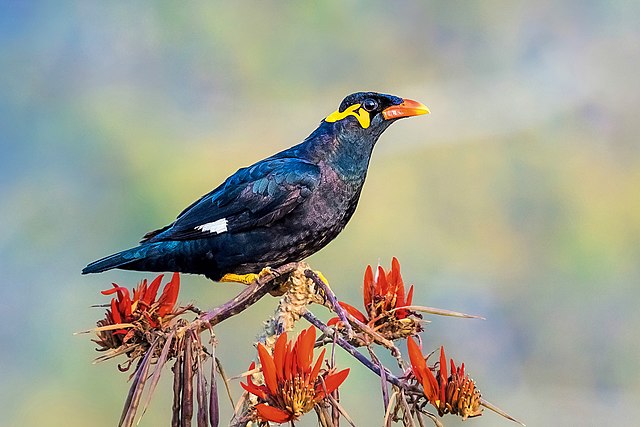
| 1 | MY | 4 | Talking starling that’s often a pet |
| 1 | NA | 4 | Indiaan flaat breaad |
| 1 | NA | 4 | Grandma, slang; or Peter Pan dog |
| 1 | NA | 5 | ♀ goat, or nursemaid |
| 1 | NA | 6 | Swimming or floating adj. from Latin |
| 1 | NA | 5 | Well dressed, adj. |
| 1 | NO | 4 | 12:00, midday, 🕛 |
| 1 | NO | 4 | In grammar, a person, place or thing |
| 1 | NU | 5 | Fruit consisting of a hard or tough shell around an edible kernel |
| 1 | ON | 4 | Preposition when mounting an animal or boarding a large vehicle |
| 1 | OT | 7 | Turkish Empire; or low, upholstered seat or footstool without a back or arms |
| 1 | OU | 6 | Overpower with skill and/or physical strength and/or numbers; compound made from opposite of in + ♂ |
| 1 | TA | 10 | Equivalent in seriousness to; virtually the same as |
| 1 | TA | 5 | Provoke with words |
| 1 | TO | 4 | Broadway award, or Maj. Nelson on "Jeannie" |
| 1 | TO | 4 | Animated film or character, slang abbr. (car…) |
| 1 | TU | 4 | Chicken of the sea (Ahi …) |
| 1 | UN | 5 | Adult ♂ |
| 1 | UN | 7 | Get on a horse, or geographical name start (St. Helens, Shasta, Everest), past tense is a pangram |
| 1 | UN | 4 | Archaic preposition (Handel’s Messiah “For … us a child is born”) |
| 1 | YU | 4 | ¥ (Chinese money) |
This site provides clues for a day's New York Times Spelling Bee puzzle. It follows in Kevin Davis' footsteps. The original set of 4,500 clues came from him, and they still make up about three quarters of the current clue set.
The "Bee Roots" approach is to provide explicit clues for root words, not every word. As logophiles, we are pretty good at putting on prefixes and suffixes, changing tense, and forming plurals (including Latin plurals!). The clues cover root words, arranged alphabetically by root word, with a count of words in the puzzle that come from each root. For example, if a puzzle includes ROAM and ROAMING, there will be a clue for ROAM and a count of 2. The root may not appear in the puzzle at all; for example, the 2021-07-23 Bee included ICED, DEICE, and DEICED. For such a puzzle, the clue would be for ICE with a word count of 3.
The Bee Roots approach involves judgement sometimes. For example, if a puzzle includes LOVE, LOVED, and LOVELY, how many roots are needed to cover them? LOVE and LOVED share the root LOVE, certainly, but LOVELY is tricky. LOVE is part of its etymology, but by now, the word means "exquisitely beautiful," which is a lot farther from the meaning of LOVE than swithcing to past tense. I'm inclined to treat LOVE and LOVELY as separate roots. You may not agree, which is fine. Another thing we logophiles share is a LOVE of arguing about words on Twitter.
A few words can have one meaning as a suffixed form and another as a stand-alone word. EVENING, for example. In those cases I will use the meaning that I think is more common.
One last complication, until another one pops up: a few roots have multiple spellings, for example LOLLYGAG and LALLYGAG. Depending on the day's letters, and maybe even the editor's whims, one or both could be in the puzzle's answer list. With such roots, you could see a word count of 2, even if there are no applicable prefixes or suffixes.
I will do my best to keep this site up to date and helpful (I hope). Check it out, and tweet feedback to @donswartwout Tweet to @donswartwout